 English




S3-1: Lao Zhou, the Press Captain: His Hands Are on the Machine, His Mind Is Half a Beat Ahead
Published: 2026-09-04 | Series 3: The People (Dongguan Craftsmen) — Profile 1 | Reading time: 7 minutes
Lao Zhou, the Press Captain: His Hands Are on the Machine, His Mind Is Half a Beat Ahead
Lao Zhou does not watch the press. He listens to it.
He is fifty-two, from 【待填:籍贯】, and he came to Dongguan in 2003, the year he turned 【待填:来莞时的年龄】. He has run the same kind of offset press for twenty years. He can tell you, from the sound alone, whether a roller is a fraction too tight, whether a feeder is about to misfeed, whether the ink is sitting right on the plate.
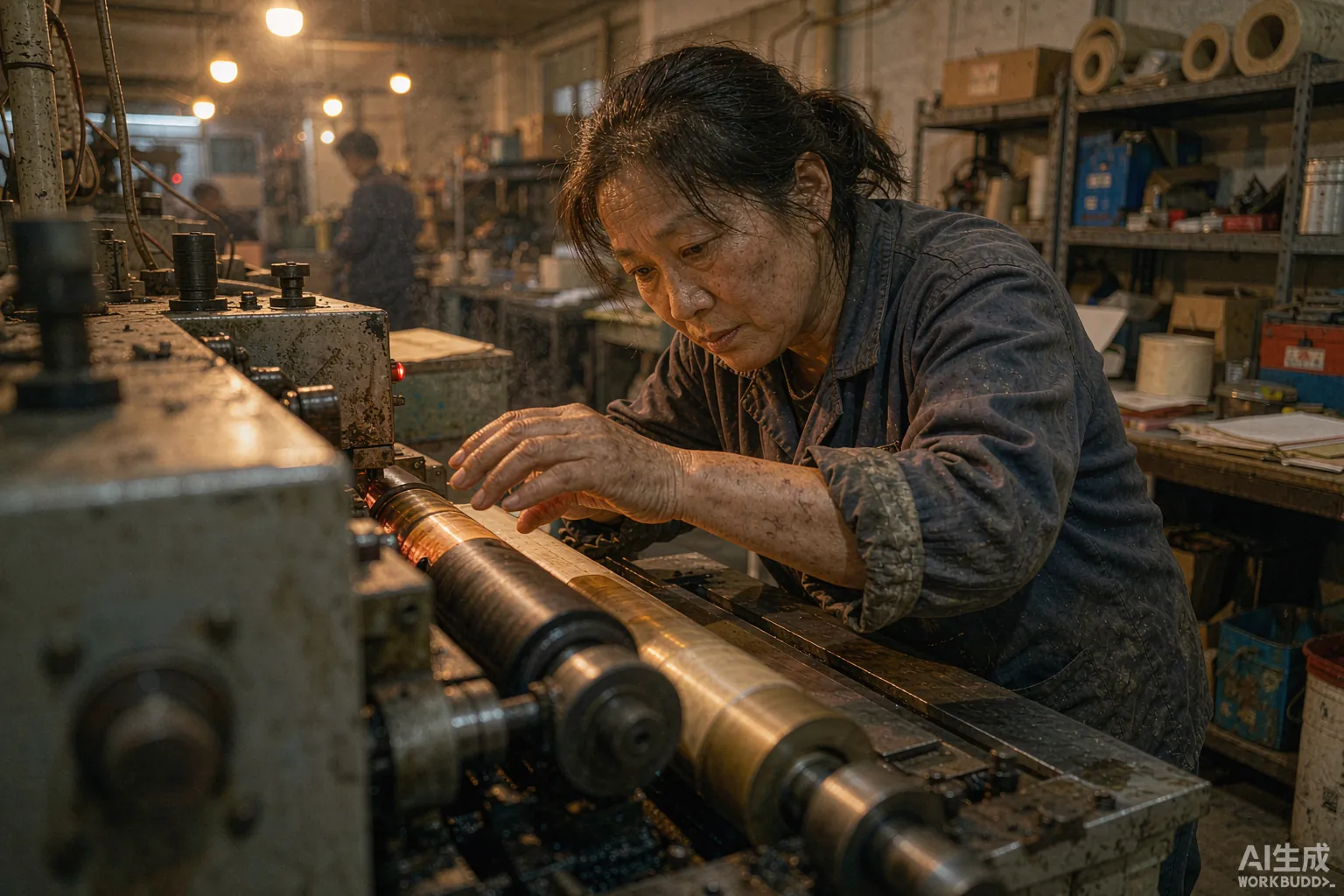
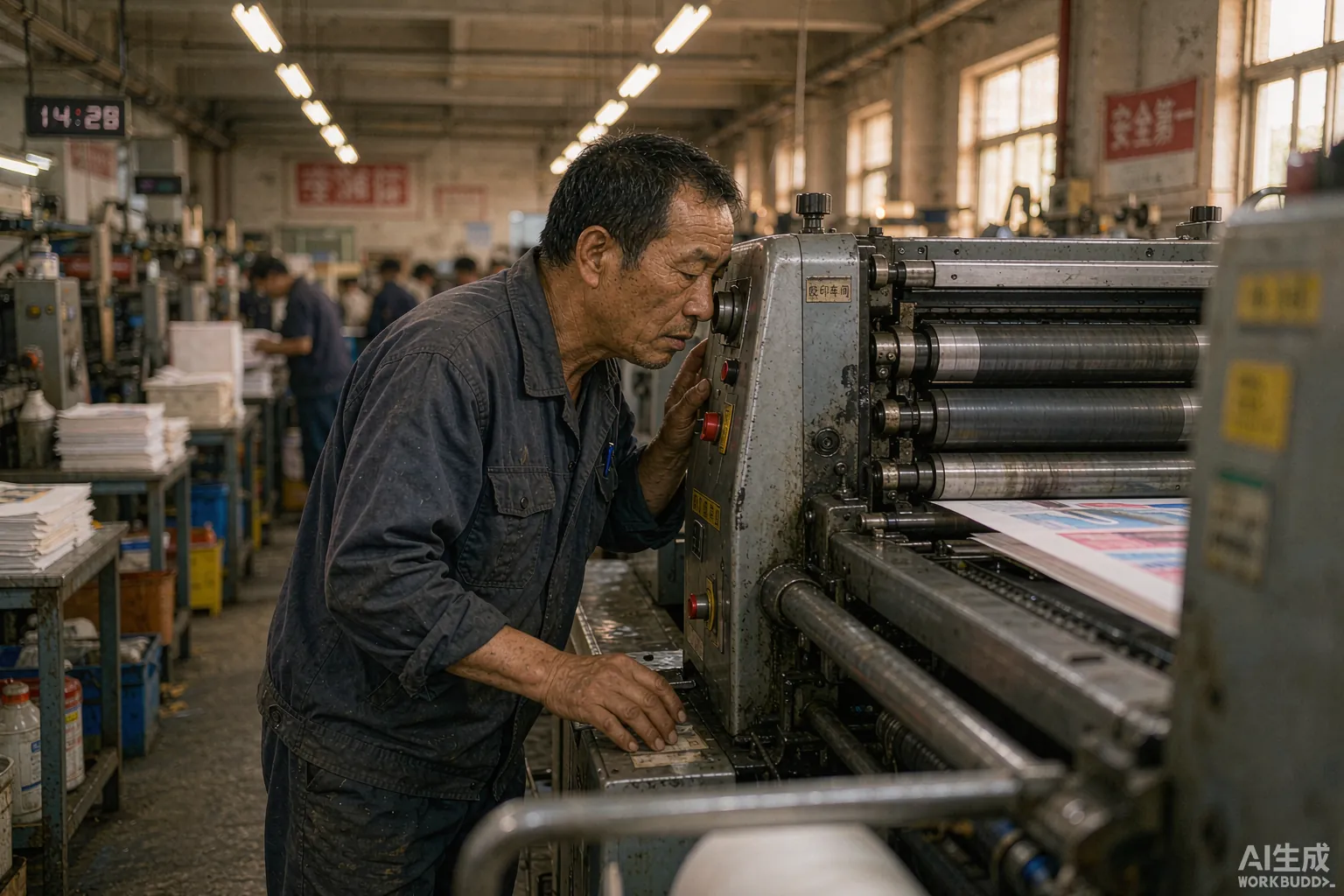
This morning, at six-forty, before the floor is fully lit, he is already walking the length of the machine, one hand resting on the housing, feeling the hum.
"It talks," he says, in the flat, unbothered way of a man stating a fact. "You just have to listen."
Twenty years on one machine.
Lao Zhou started as a helper, feeding paper. His hands were fast, his eyes were faster, and within three years he was running the press himself. He has run it ever since — through three factories, through the years when the work was easy and the years when it was hard, through the night shifts that turned his hair grey at the temples.
He does not talk about those years much. When he does, it is in numbers. "Two thousand and eight," he says, "that was a hard year. The orders stopped. Half the floor went home." He does not say what he felt. He says he stayed, because the press needed someone who knew it.
What he will talk about, at length, is the machine. Its quirks. Its moods. The way it runs hot in summer and stiff in winter, the way a certain grade of board makes the fourth roller sing. He knows it the way a man knows an old friend — not as a thing he owns, but as a thing he has grown alongside.
The two-second pause.
There is a thing the younger workers have noticed about Lao Zhou, though none of them has quite put it into words. When something is about to go wrong — a misfeed, a smear, a plate about to slip — he is already there, his hand on the stop, a half-second before it happens.
It looks like reflex. It is not. It is attention.
This morning, a feeder jams. Before the alarm sounds, Lao Zhou is there, his hand on the release. He clears it in four seconds, without hurry. The new man, Xiao Li, watches him. "How did you know?" he asks.
Lao Zhou does not look up. "The sound changed," he says. "A quarter-second before it jammed, it got louder. Didn't you hear it?"
Xiao Li did not hear it. That is the whole of it. The difference between a man who runs a press and a man who knows a press is a quarter-second of sound, and twenty years of paying attention.
What his hands know.
Lao Zhou's hands are not remarkable to look at. They are a working man's hands — stained faintly at the cuticles with ink that never fully washes out, the knuckles thickened, the nails kept short. But watch them work, and they tell you what twenty years means.
He does not measure the ink density with his eyes alone. He puts a finger to the sheet, feels the lay of it, the tack, the weight. He does not check the registration with a loupe every time. He holds the sheet to the light, tilts it, and his eye — trained by ten thousand sheets — finds the quarter-millimeter drift that the machine's sensor has not yet flagged.
"You can't teach this in a book," he says. "You can only learn it by doing it wrong, enough times, until you know what wrong feels like."
He has done it wrong, he says, more times than he can count. He does not say this with shame. He says it the way a man says he has eaten a lot of meals — it is simply the truth of a long working life.
The quiet pride of a press captain.
Ask Lao Zhou if he is proud of his work, and he will shrug. Ask him to show you a box he made, and he will pick one up, turn it over in his hands, and tell you, without prompting, exactly what is right with it — the evenness of the ink, the crispness of the fold, the way the gold sits on the surface without a single pinhole.
He does not call himself a craftsman. He calls himself a press captain, a job title, nothing more. But there is a moment, at the end of a good run, when he stands back and watches the sheets come off the press — clean, even, perfect — and something in his face settles. It is not pride, exactly. It is the look of a man who has done a thing well, and knows it, and does not need to say so.
He has a son, 【待填:儿子的年龄】years old, back in【待填:籍贯】. The boy does not know what his father does, not really. He knows his father works in a factory, in a faraway city, and that the factory makes boxes. He does not know that his father can tell, by sound alone, when a machine is about to fail. He does not know that the boxes his father makes travel to Dubai, to Jakarta, to cities the boy has only seen on a map.
Lao Zhou does not tell him. He sends money home. He calls on Sundays. He goes back once a year, at Spring Festival, and he stands in the doorway of his own house, and he looks at his son, and he does not say, "I make boxes." He says, "I'm home."
Six-forty in the morning.
It is seven now. The floor is lit. The press is running, steady and sure. Lao Zhou walks the length of it one more time, his hand on the housing, feeling the hum. The hum is right. The day has begun.
He does not look at the clock. He does not need to. He has been doing this for twenty years, and his body knows the rhythm of the day the way it knows the rhythm of the press — the first run, the first check, the first sheet to the light.
He picks up a sheet, holds it to the light, tilts it. It is good. He sets it down.
"Next one," he says, to no one in particular.
And the day goes on.
中文对照
老周不看机器,他听机器。
他五十二岁,【待填:籍贯】人,2003 年来东莞,那年他【待填:来莞时的年龄】岁。他开同一型号的胶印机,开了二十年。光听声音,他就能告诉你,哪个滚筒紧了一丝,飞达是不是要卡纸,油墨在版上匀不匀。
今早六点四十,车间还没完全亮起来,他已经沿着机器走了一趟,一只手搭在机壳上,摸那个震动。
"它会说话,"他说,语气平平,像在说一件再普通不过的事。"你得听。"
一台机器,二十年。
老周是从学徒做起的,喂纸。他手快,眼更快,三年就自己上机了。从那以后,他就没离开过这台机器——换了三个厂,熬过活好做的年头,也熬过活难做的年头,熬过把两鬓熬白的夜班。
那些年头,他不太提。提起来,也是数字。"2008 年,"他说,"那年难。单子停了,车间走了一半人。"他不说他当时什么感受。他说他留下了,因为这台机器,得有人懂它。
他愿意长篇大论讲的,是这台机器。它的脾气,它的性子。它夏天跑热、冬天跑僵,某种克重的纸板会让第四根滚筒"唱歌"。他懂它,像人懂一个老朋友——不是他拥有它,是他跟它一起,长了二十年。
那两秒的停顿。
年轻工人都注意到老周一个本事,只是没人说得清。每当要出问题——卡纸、蹭脏、版要滑——他已经在那里了,手按在停止键上,比出事早半秒。
看着像反应快。不是。是专注。
今早,飞达卡纸了。警报还没响,老周已经到,手按在释放键上。四秒钟,他不慌不忙地清了。新来的小李看着他:"您怎么知道的?"
老周没抬头。"声音变了,"他说。"卡纸前四分之一秒,它变响了。你没听见?"
小李没听见。这就是全部。开机器的人,和懂机器的人,差的就是那四分之一秒的声音,和二十年的专注。
他的手知道什么。
老周的手,看着没什么特别。一双做工的手——指甲缝里永远洗不净的油墨,指节粗大,指甲剪得很短。可你看它干活,就知道二十年是什么。
他不光用眼睛看油墨浓度。他把手指搭上纸面,摸那个附着感、那个黏度、那个分量。他不每次都拿放大镜看套准。他把纸对着光,一斜,他的眼——被一万张纸练出来的眼——能找出机器传感器还没报警的那四分之一毫米偏差。
"这东西,书本上学不来,"他说。"只能做错,错够次数,直到你知道'错'是什么感觉。"
他做过的错,数不清。他说这话不带愧。就像一个人说自己吃过很多顿饭——那只是一个干了很多年活的人,实话实说。
一个机长安静的骄傲。
你问老周,对自己的活骄傲吗,他会耸耸肩。你让他拿一只他做的盒子给你看,他会拿起一只,在手里翻过来,不用你问,就告诉你它好在哪——油墨多匀,折痕多利落,烫金在面上,一个针孔都没有。
他不叫自己手艺人。他叫自己机长,一个工种,仅此而已。但有那么一刻,一版活顺利跑完,他退后一步,看着纸一张张干净、匀净、完美地从机器里出来——他脸上有什么东西,定了。那说不上是骄傲。那是一个把活干好了的人,心里清楚,也不必说出口的样子。
他有个儿子,【待填:儿子的年龄】岁,在【待填:籍贯】老家。孩子不知道爸爸是干什么的,不真的知道。他只知道爸爸在很远的一座城市的工厂里上班,工厂做盒子。他不知道,他爸光听声音,就知道一台机器什么时候要坏。他不知道,他爸做的盒子,会去迪拜、去雅加达,去那些他只在地图上见过的城市。
老周不告诉他。他往家寄钱。他周日打电话。他一年回一次,春节。他站在自己家门口,看着儿子,他不说"我做盒子"。他说:"我回来了。"
清晨六点四十。
现在七点了。车间亮了。机器在跑,又稳又准。老周又沿着它走了一趟,手搭在机壳上,摸那个震动。震动对了。这一天,开始了。
他不看钟。不需要。他干了二十年,身体知道一天的节奏,就像它知道机器的节奏——第一版,第一查,第一张对光。
他拿起一张纸,对着光,一斜。是好的。他放下。
"下一张,"他说,不知对谁说。
这一天,就这么过下去。
Profile 1 of the "The People" series — about the hands that make the things behind the scenes in Dongguan.