 English




S2-2: Forty Years: From "Three Ins and One Compensation" to the World's Packaging Capital
Published: 2026-09-04 | Series 2: The Bay — Time | Reading time: 7 minutes
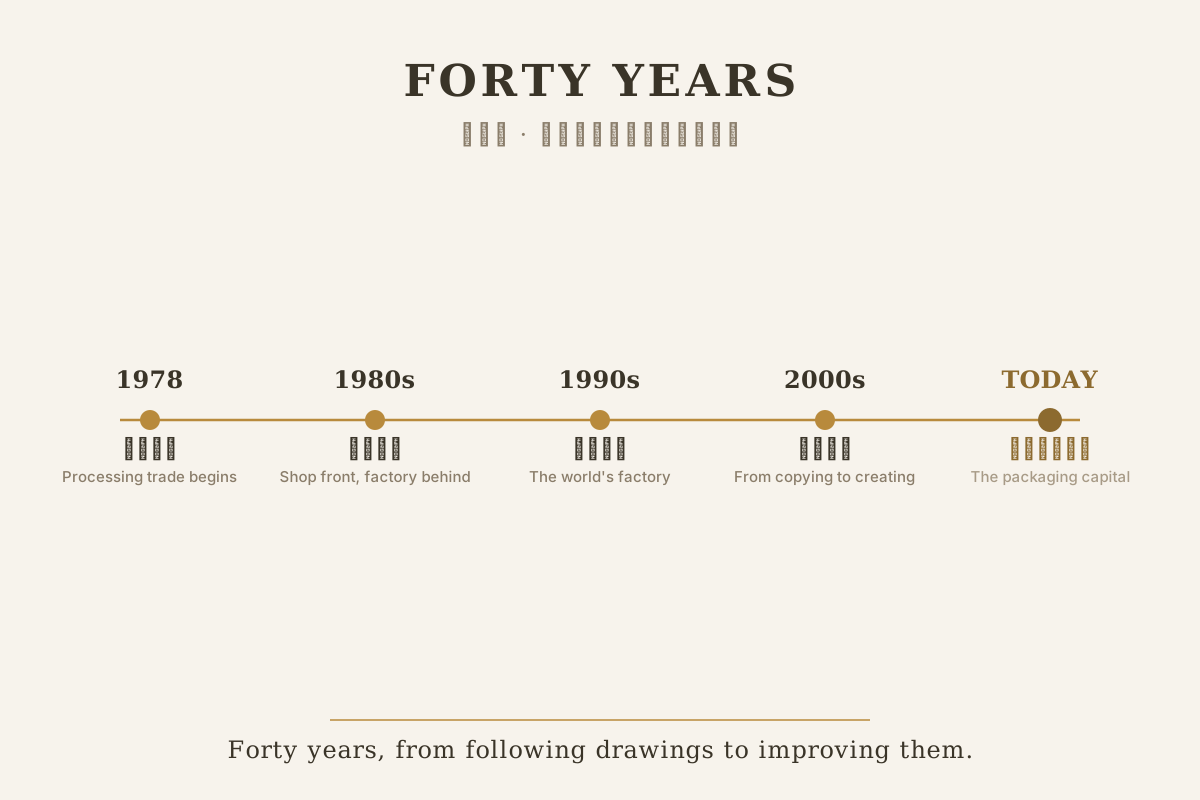
There is a phrase — 三来一补 — that almost no one under forty in the GBA can explain anymore. It sounds like the title of an old textbook. But forty years ago, these four characters were the entire story of this place, and the reason so many of the world's boxes are made here.
三来一补. Three things came in — materials, samples, parts. One thing went out — goods to pay for it all. To the rest of the world it meant nothing. To this delta, it meant everything.
The shop in front, the factory behind.
In those early years, the arrangement was simple, and it was humbling. A businessman from Hong Kong would cross the river with a roll of drawings and a bag of raw materials. He was the "shop" — the face, the finance, the order book. On this side of the water, people supplied what they had in abundance: land, and hands.
They called it 前店后厂 — "shop in front, factory behind." Hong Kong took the order; the delta made the goods. The money was small. The work was not. It was the region's original division of labor, and it taught the GBA its first lesson: if you want to make things, you first have to be trusted to make them.
The years of the apprentice.
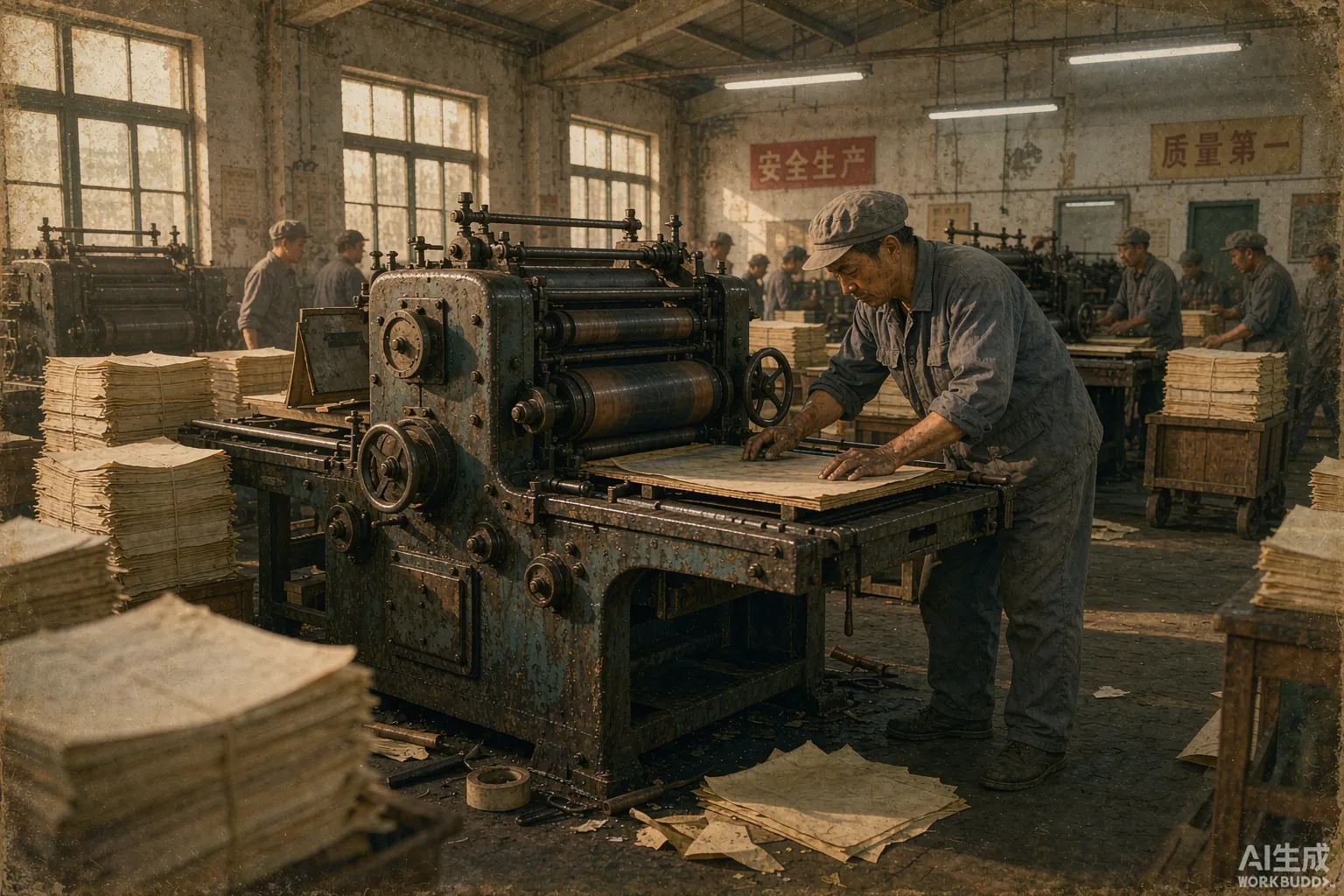
For a long time, the delta made things to other people's drawings. A box would arrive as a spec sheet, and someone here would make it — faithfully, exactly, ten thousand times. There was no glory in it. There was no brand. There was only the quiet, unglamorous work of doing exactly what you were told, and doing it again.
But this is the part of the story most worth telling, because it is where the craft was actually learned.
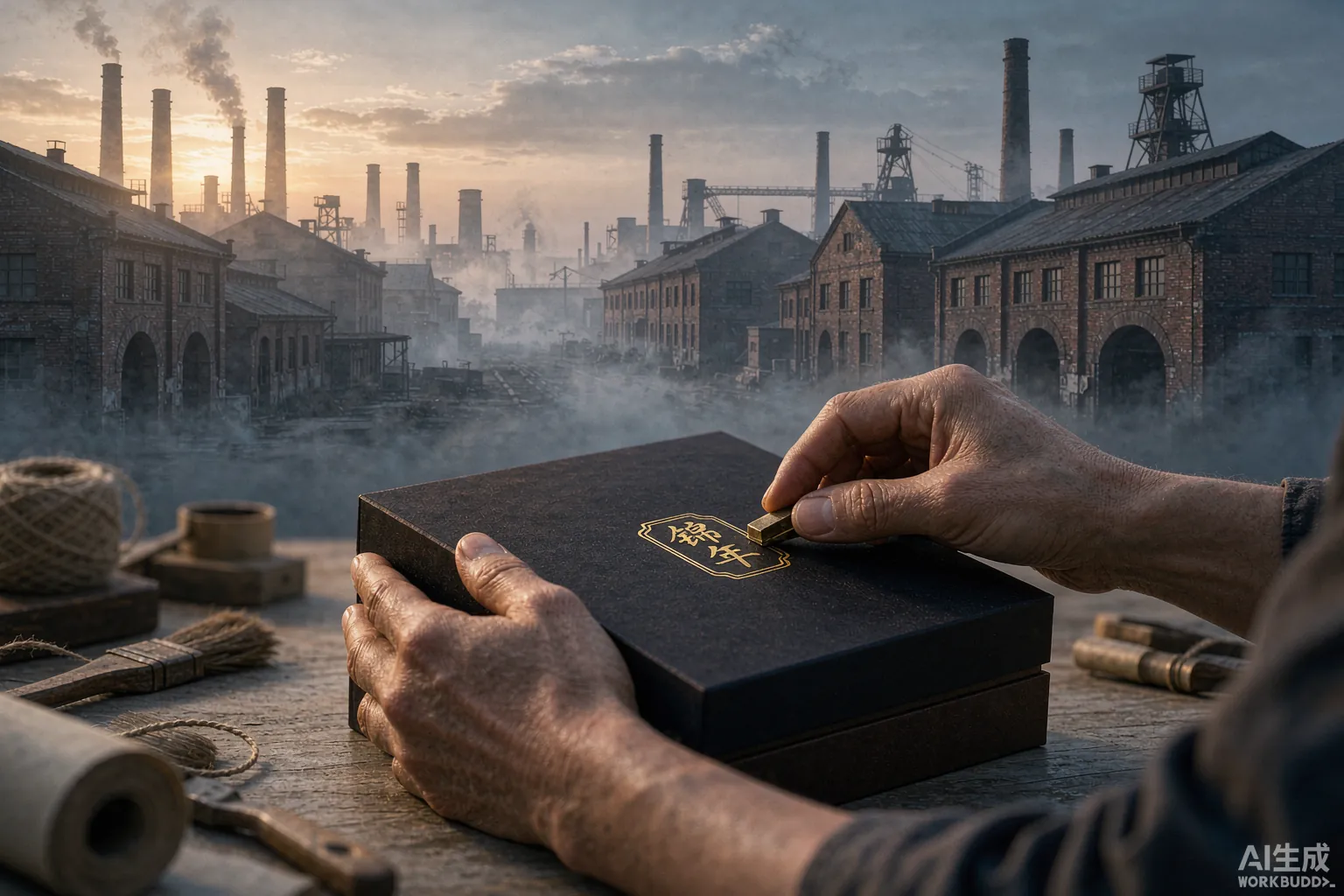
You cannot understand the temperature of foil by reading about it. You learn it with the back of your hand, over ten thousand boxes. You cannot read the depth of an emboss from a diagram. You learn it with a fingernail, over ten thousand boxes. All the things we now call "craft" — the foil that reads light, the emboss the fingertip cannot deny, the velvet that silences a reveal — were learned here, in the apprentice years, in the repetition, when no one was watching.
The turn.
Then, slowly, something changed. A person who has made a million boxes eventually starts to think: why exactly like this? Why not a little better?
The turn from copying to creating did not happen on a single day. It happened the way all real changes happen — in small, stubborn, private moments. A factory owner who stayed late to adjust a die. A designer who redrew a hinge so it would close more softly. A craftsman who argued with a client about the weight of the paper.
The GBA stopped being a place that followed drawings, and became a place that improved them. It kept the discipline of the apprentice — and added the ambition of the maker.
The world's packaging capital.
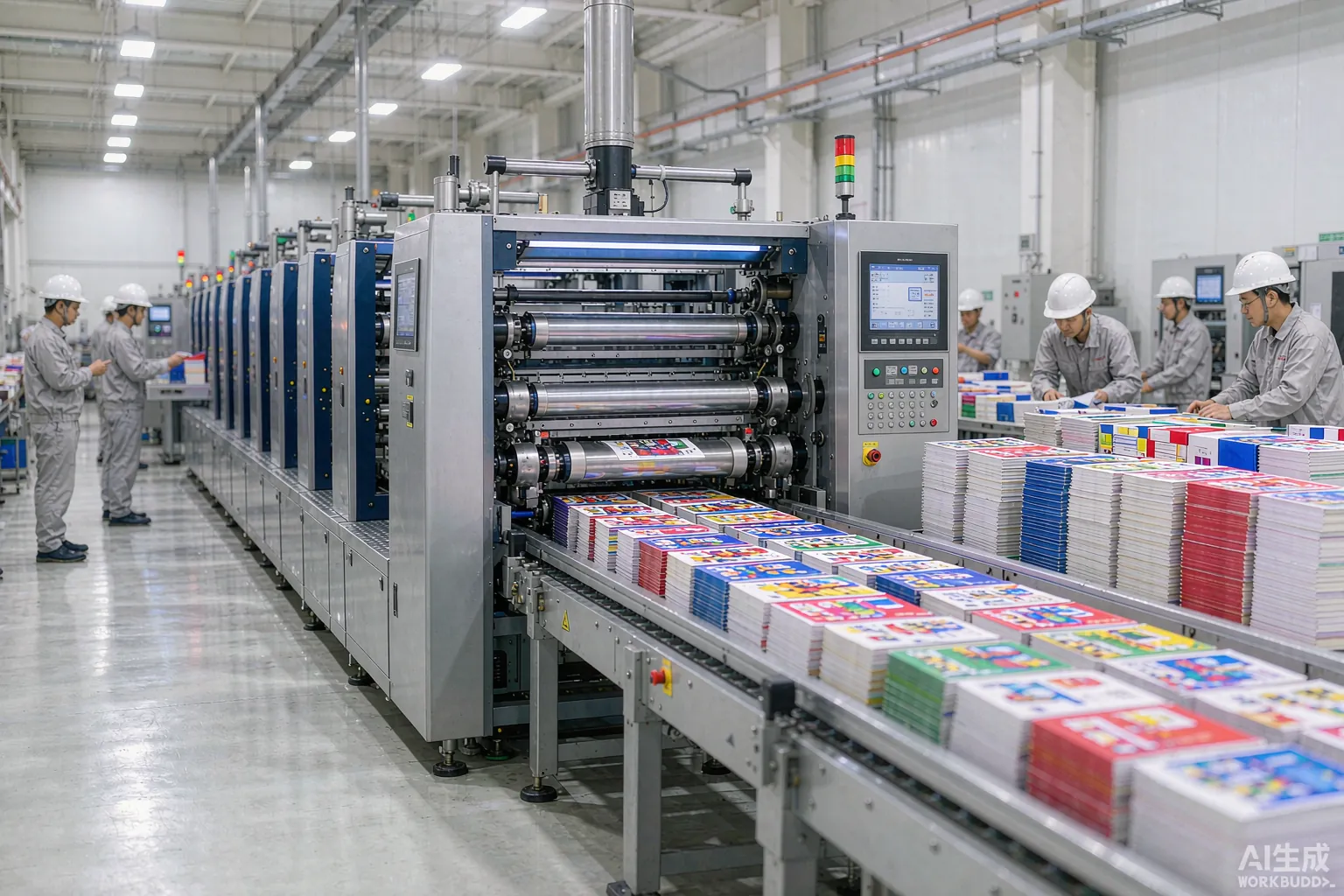
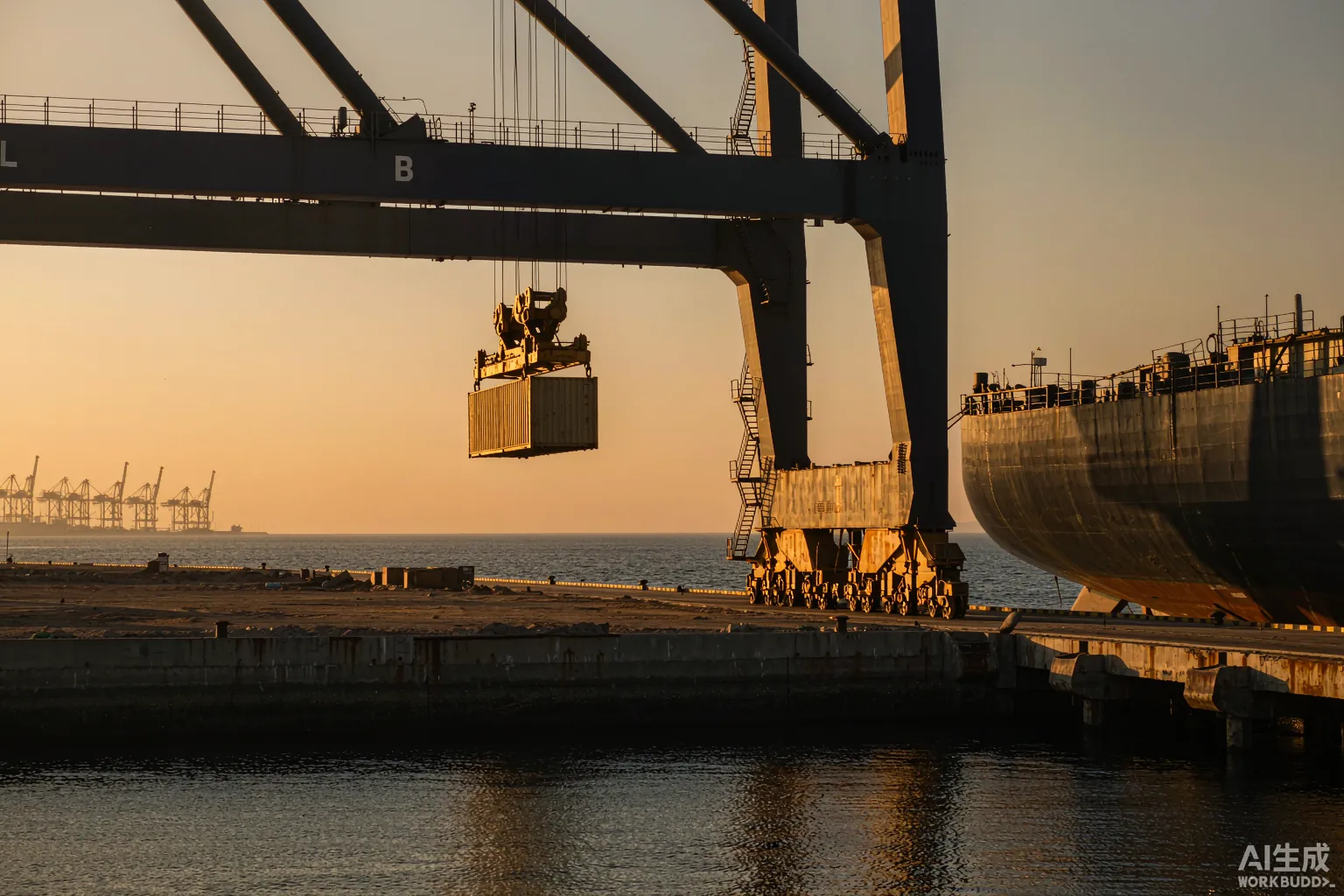
Here is where forty years have led. Not to a place that makes the most boxes — though it does. But to a place that can make, within a hundred kilometers, everything a box needs: the paper, the ink, the foil, the magnet, the ribbon. A place where a drawing sent on Monday can be a sample in your hand by Friday, and a container on the water by the end of the month.
Nobody crowned the GBA the world's packaging capital. The world did it quietly, the way the world always votes — with orders. It votes every time a perfume house in Dubai, a jeweller in Riyadh, a tea brand in Jakarta sends its drawing here, and asks: can you make this — and can you make it better than the drawing?
The hardest lesson.
If you ask what the forty years were for, the answer is not money, and it is not speed. It is this: the GBA learned the hardest lesson in any craft — the difference between making something, and making it well.
Forty years ago, this delta made boxes from someone else's drawings, and was glad to have the work. Today, the world sends its drawings here — and asks us to make them better than the drawing.
That is what forty years can do. It is just long enough to turn an apprentice into a master — and just long enough to learn that a master is still learning.
GBA Pack — Forty years from the apprentice years to the world's packaging capital. Dongguan, China.